Reuse of construction materials, recovery of biowaste, home care: three committed women entrepreneurs were distinguished at the first edition of the Social and Solidarity Economy Leaders Award, co-created by France Active and Mirova Foundation. Joanne Boachon, founder of Minéka, Aline Vieille, manager of Trivial Compost, and Eva Muringer, co-founder of Flavi, are the winners in the “Circular economy and reuse”, “Ecological transition” and “Solidarity” categories respectively.
Each of them receives an award of €5,000 to support the development of her project.
In the presence of Serge Papin, Minister for Small and Medium-sized Enterprises, Trade, Crafts, Tourism and Purchasing Power, the three winners were recognised on 15 October in Paris, at the National Forum of Associations and Foundations (‘FNAF’), chosen from nine finalists selected from more than 50 applications submitted from across the regions.
A new Award to shine a light on the women driving change in the SSE
With this first edition of the Social and Solidarity Economy Leaders Award, France Active and Mirova Foundation aim to shine a light on women who are developing practical, useful solutions throughout France to address major social and environmental challenges.
This year’s nine finalists competed in three categories: “Circular economy and reuse”, “Solidarity” and “Ecological transition”. Beyond the impact of their projects, the Award also seeks to recognise their ability to develop new economic models, work closely with local communities and put into practice the principles of cooperation and shared governance that are distinctive to the SSE.
Each of the three winners received €5,000, a sum intended to support the development of her activity.
At the start-up stage, almost one in two entrepreneurs funded by France Active is a woman, and 93% of the women entrepreneurs it supports are still in business three years after setting up, compared with the national average of 75% (Insee, 2023).
Mirova Foundation, Mirova’s endowment fund, supports initiatives serving the public interest that promote empowerment and autonomy, focusing on three priority areas: education, employment and access to essential resources.

PIERRE-RENÉ LEMAS President of France Active Through this Award, we want to shine a light on women leaders who are providing very concrete responses to the needs of their local areas and to the major transitions we must undertake. Our role, particularly in a more challenging economic context, is also to give them the means to consolidate their model, scale up and make their work visible to the general public and the media. Supporting women entrepreneurs means helping to build an economy that is more inclusive, more sustainable and more representative of society.

ANNE-CLAIRE ROUX Managing Director By co-creating, with France Active, the Award for Women Leaders in the Social and Solidarity Economy, Mirova Foundation sought to create a programme capable of highlighting and supporting women who, throughout France, are developing practical responses to major social and environmental challenges, while bringing new economic models to the fore in local areas. The three award winners fully embody this ambition, through the diversity of their projects in the fields of reuse, the ecological transition and solidarity, as well as through their ability to undertake, innovate and create impact as close as possible to people’s needs. By providing them with resources, visibility and recognition, this Award aims to help consolidate their activities and scale them up, while affirming the need to provide greater support for women’s entrepreneurship and the development of a more inclusive, sustainable and empowering economy.
3 award-winning women, 3 concrete responses to social and environmental transitions
- CIRCULAR ECONOMY AND REUSE
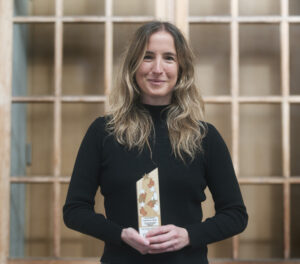
Joanne Boachon – MINÉKA – Villeurbanne (69)
Giving building materials a second life
A trained architect, Joanne Boachon wanted to make a difference in her profession, reduce waste from the construction sector which is the largest producer of waste in France and incorporate reused materials into construction projects. But she came up against a very practical obstacle: the lack of places where such materials could be sourced. She therefore decided to create the missing link herself.
In 2016, she founded Minéka in Villeurbanne, an association that collects materials destined to be thrown away on construction sites, to give them a second life and make them available to everyone, in particular through a solidarity-based pricing policy.
Since then, Minéka has expanded its activities to include consultancy and training for professionals in the sector. Joanne Boachon has also helped structure the sector by contributing to the creation of a network of material libraries, first at regional level (Mataura) and then nationally.
Based in a priority neighbourhood under urban policy in Villeurbanne, the organisation now employs the equivalent of 7 full-time staff. It thus combines the circular economy, access to reuse, local roots and a social dimension.
- ECOLOGICAL TRANSITION
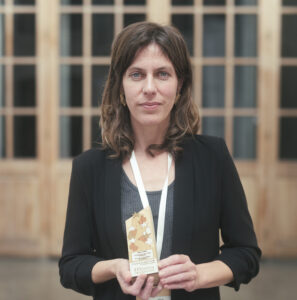
Aline Vieille – TRIVIAL COMPOST – Besançon (25)
Making food and garden waste a resource at the heart of the city
With Trivial Compost, Aline Vieille is working to change perceptions of organic waste and make composting accessible to as many people as possible.
Initially established as an association in 2010, the organisation became a worker cooperative (‘SCOP’) in late 2022, accredited as a Socially Utility Solidarity Enterprise (‘ESUS’). Historically a partner of the local inter-municipal association in developing composting at the foot of apartment buildings, it has gradually become an organisation involved in preventing and locally treating food and garden waste.
As managing director, Aline Vieille leads business development, partnerships and public procurement, while continuing to regularly take part in collections alongside her team.
Trivial Compost has now diversified its activities: food and garden waste collection, composting, dry toilet hire, training, consultancy and action to combat food waste. The organisation has eight employees, equivalent to 6.7 full-time posts.
- SOLIDARITY
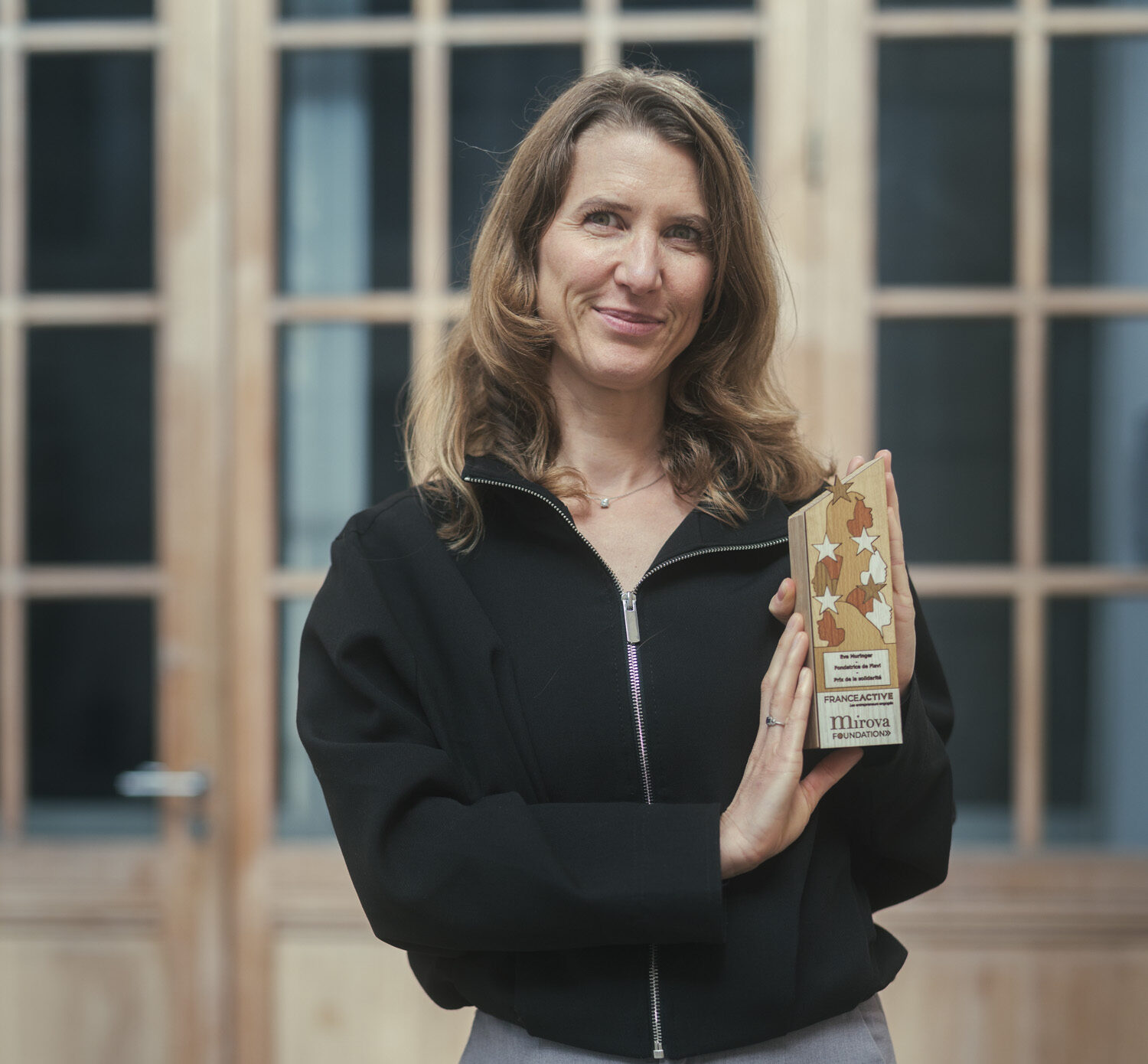
EVA MURINGER – FLAVI – Montpellier (34)
Making life safer for families and recognising the value of home care work
Flavi’s story begins with a personal experience. A university lecturer, Eva Muringer came up against the difficulties faced by her own mother, who became a carer for her grandmother after a sudden loss of independence.
Confronted with the vulnerabilities of the home care sector, she sought a solution that would both make life safer for families and better recognise care workers. Her meeting with Flavie, an experienced social care worker who had been working as a directly employed carer for fifteen years, proved decisive.
In 2021, they founded Flavi, a social and solidarity economy business combining a training organisation for family members who employ carers and social care workers with a trusted matchmaking platform.
The aim: to enable professionals to work in better conditions while supporting families at every stage of care at home.
Through training, support and recognition for professions still too often marked by precarious conditions, Flavi aims to help build a safer, fairer and more sustainable model of home care.